 English
 Deutsch
 Español
 русский

1. What is a Steel Explosion Welding Composite Panel?
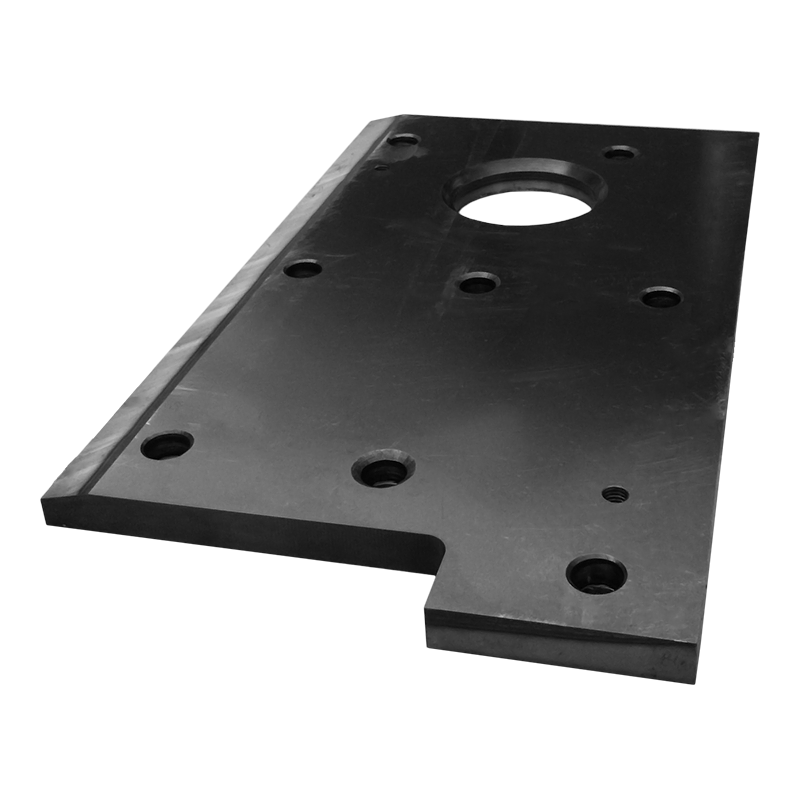
A Steel Explosion Welding Composite Panel is a multilayer panel manufactured by explosive welding (also called explosion bonding) where a high-velocity metal impact produces a metallurgical bond between dissimilar metals without melting. The process typically joins a corrosion-resistant face (e.g., stainless steel, nickel alloy, or copper) to a structural steel backing. The result is a composite material that combines the best properties of both metals — surface durability and underlying mechanical strength — in a single, large-area panel suitable for industrial, architectural, and marine applications.
2. Unique mechanical and metallurgical advantages
Explosion welding creates a wavy, interlocked interface and a thin diffusion layer that offers superior shear and tensile strength compared with adhesive or mechanical bonding methods. Because the bond is metallurgical rather than adhesive, it resists delamination under cyclic loads and thermal expansion. This makes explosion-welded panels particularly robust in dynamic environments such as pressure vessels, heat exchangers, and offshore structures where repeated loading and temperature changes occur.
2.1 Key performance characteristics
- High shear strength and fatigue resistance due to metallurgical bonding and interface morphology.
- Minimal heat-affected zone because the process is solid-state (no melting), preserving base metal properties.
- Ability to maintain mechanical integrity at elevated temperatures when alloys are chosen correctly.
3. Corrosion resistance and long-term durability
One of the most practical reasons to choose explosion-welded composite panels is the ability to specify a thin, corrosion-resistant surface material while relying on a lower-cost structural substrate. Because the face metal is continuous and metallurgically bonded to the steel backing, the exposed surface behaves like a monolithic corrosion-resistant plate. This reduces maintenance, extends service intervals, and lowers lifecycle costs in aggressive environments such as chemical processing, seawater systems, and desalination plants.
3.1 Typical service benefits
- Extended replacement cycles — fewer shutdowns for surface repairs or recoating.
- Reduced risk of galvanic corrosion when compatible alloy combinations and proper edge treatments are specified.
4. Dissimilar metal joining: design flexibility and material optimization
Explosion welding enables reliable joining of combinations that are difficult or impossible with fusion welding — for example, joining stainless steel or nickel alloys to carbon steel, copper to steel, or titanium to steel in some specialized cases. This design flexibility lets engineers optimize for surface performance, structural cost, weight, and thermal properties simultaneously, rather than compromise on a single material property.
4.1 Examples of optimized pairings
- Stainless steel face + carbon steel backing: corrosion resistance + load-bearing economy.
- Copper or cupronickel face + steel backing: excellent thermal/electrical conductivity with structural support.
5. Thermal and fabrication advantages
Because explosion welding is a solid-state process, the heat input to the metals is negligible compared with fusion welding. This preserves the original microstructure and mechanical properties of both the face and backing materials. Panels can be fabricated in large dimensions and later cut, formed, or welded (with appropriate local procedures) for installation. The method also reduces distortion and residual stress that commonly occur with high-heat joining techniques.
5.1 Fabrication and post-processing notes
- Panels are suitable for machining, bending, and edge finishing, provided the bonding interface is respected during edge trimming.
- Field welding to the backing steel is commonly used for installation; specify weld procedures to avoid compromising face material corrosion protection.
6. Cost-effectiveness and lifecycle considerations
Although initial procurement of explosion-welded composite panels may be higher than simple-coated steel, the total cost of ownership is often lower because of extended service life, less frequent maintenance, and reduced downtime. For many industrial assets, the longer intervals between repairs and the reduced need for sacrificial coatings or liners yield measurable savings over the asset lifetime.
| Feature | Explosion-welded panel | Conventional welded/coated panel |
| Bond type | Metallurgical | Adhesive/mechanical or fusion |
| Corrosion resistance | High, monolithic face | Dependent on coating integrity |
| Suitability for dissimilar metals | Excellent | Limited |
| Lifecycle cost | Lower in many applications | Often higher due to maintenance |
7. Practical considerations: inspection, quality control, and safety
Quality control for explosion-welded panels includes non-destructive testing of the bond (ultrasonic testing and metallographic sampling when necessary), validation of face and backing material properties, and careful edge preparation to avoid corrosion paths. Safety during manufacturing is specialized: explosive welding requires experienced vendors and regulatory compliance. For end users, the important practical steps are specifying accepted NDT methods, defining edge treatments, and documenting weld and installation procedures to preserve the face material’s corrosion barrier.
8. Conclusion — when to specify explosion-welded composite panels
Steel Explosion Welding Composite Panels are most advantageous when a project requires a high-performance surface (corrosion, wear, conductivity, or thermal performance) combined with an economical structural backing. They excel in demanding industrial and marine environments, heat exchangers, pressure equipment, and wherever long service life and resistance to delamination are priorities. Specifiers should weigh upfront cost against lifecycle savings, verify vendor capabilities for explosive welding and NDT, and clearly define fabrication and installation requirements to realize the full set of unique advantages these panels provide.
 +0086-513-88690066